For this week’s learning activity, we picked three events in the timeline from this week’s lesson History of Photography: An Introduction, and were asked to write a paragraph for each of those events.
The Camera Obscura
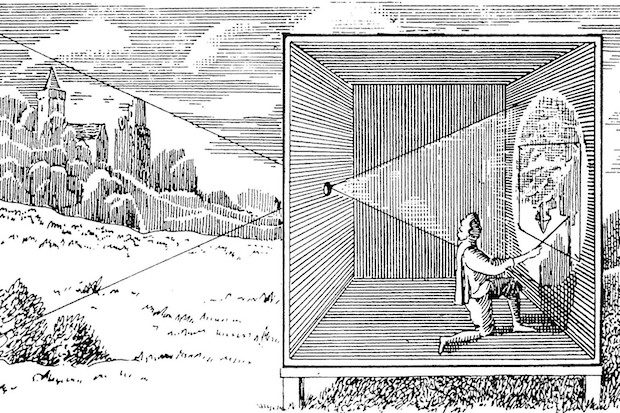
Camera obscura (latin: dark chamber) is a natural optical phenomenon that occurs when an image of a scene at the other side of a screen is projected through a small pinhole in that screen as a reversed and inverted image on a surface opposite to the opening. It basically works just like an eye, by collecting reflected light, and only lets through rays from certain points in a “scene”.
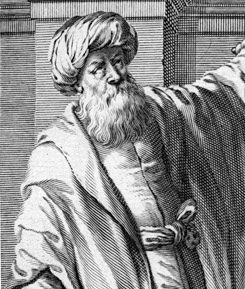
This effect was studied extensively by the Arab physicist Ibn al-Haytham in the early 11th century. While not the first one to discover the effect, his detailed observations and writings became very influential throughout Europe. Lenses were added to the Camera obscura during the 16th century, and it was further developed in the 19th century, by using it to expose light-sensitive materials, making it the first photographic camera.
Joseph Nicéphore Niépce
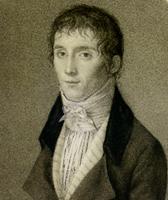
Joseph Nicéphore Niépce was a French inventor, usually credited as the inventor of photography. The camera obscura had been used as a drawing aid for a very long time, but people tried to find ways to capture the images more easily. In 1816 Niépce discovered a way to capture those images, by using paper coated with silver chloride. These images were negatives, and darkened when they were brought into the light.
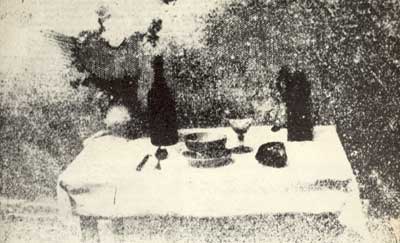
Later on, in 1829, he teamed up with Louis Daguerre, and together they developed the physautotype in 1832. They used lavender oil residue dissolved in alcohol as the photographic agent. This was coated onto a silver or glass plate and allowed to dry, after which it had a powdery white appearance. The plate was then exposed in a camera obscura for about 8 hours and developed with petroleum-based spirit vapors, which caused the least strongly exposed areas to become proportionally more transparent, creating a photographic image that was positive when viewed against a darker background.
The Roll Film
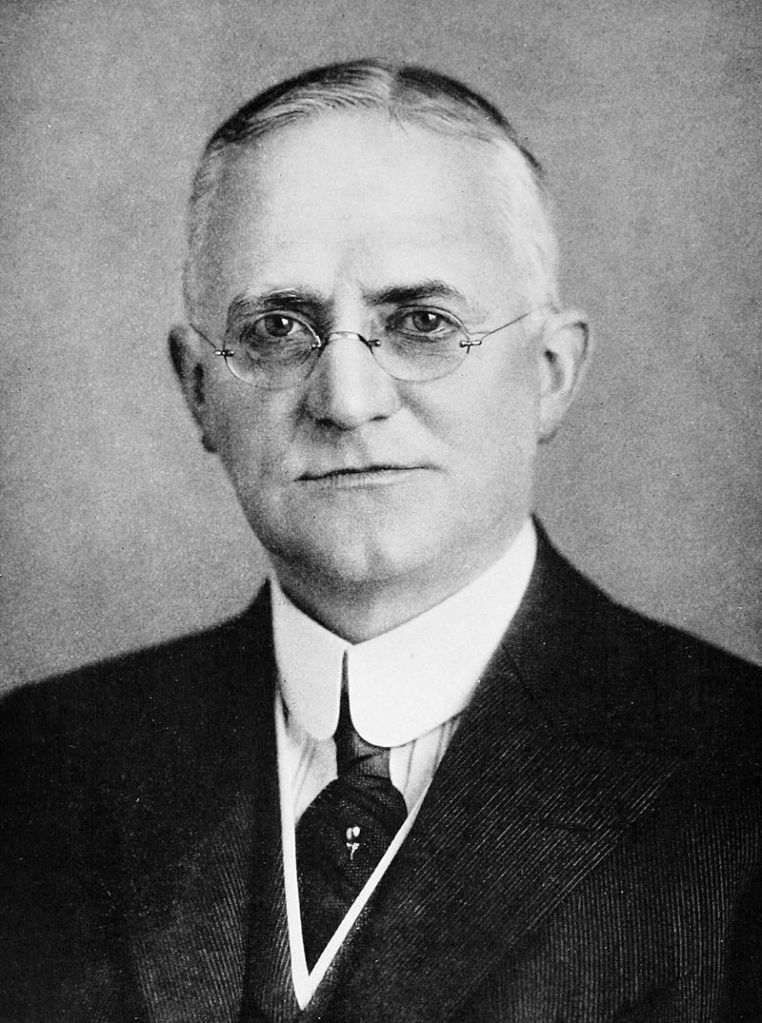
In 1884, George Eastman patented the first film in roll form to prove practicable. In 1889, he and his research chemist invented transparent film with a base that was flexible, unbreakable, and could be rolled.
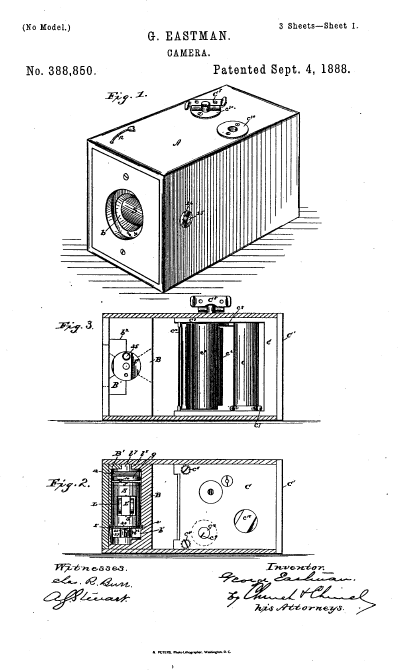
The Kodak Black camera was invented in 1888, and was the first camera designed to make use of roll film. The availability of this flexible film led to the development of Thomas Edison’s motion picture camera in 1891. In 1892 George Eastman incorporated his company under the name Eastman Kodak, and by 1896 became the leading supplier of film stock internationally.
 My Reflective Journal
Leave a comment